
Tag: Session replay
All blog posts with this tag.
- 04 May, 2026
Session replay and the CNIL final recommendation: an operational checklist
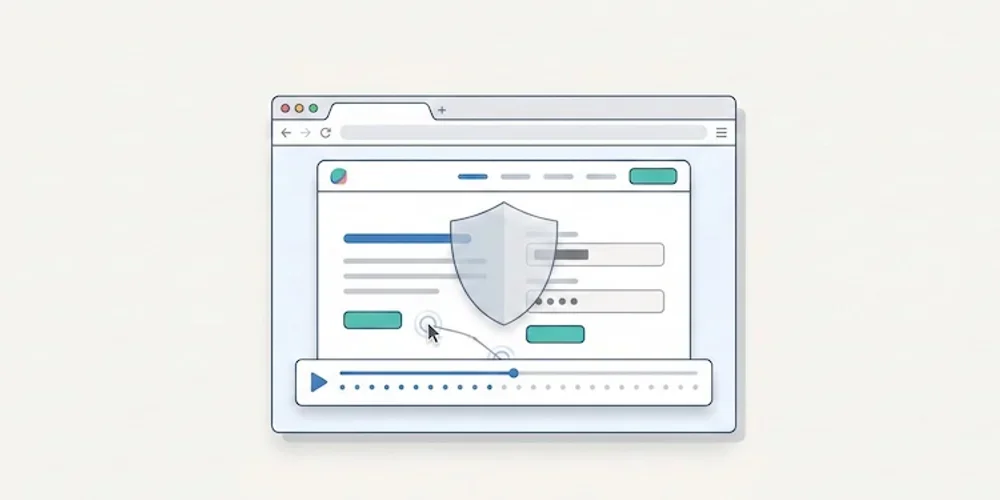
Updated 9 November 2026. Following the public consultation launched in February 2026, the French CNIL adopted its final session replay recommendation on 8 October 2026 and announced publication on 5 November 2026. This article now reflects the final text. The consultation remains part of the history, but it is no longer the only relevant reference. Session replay tools are not ordinary audience-measurement tools. They can record detailed interactions: scrolling, clicks, form behavior, interface hesitations and sometimes typed content if masking is incomplete. That level of detail creates a different risk profile from aggregated traffic statistics. The practical consequence is simple: product, marketing and support teams should not activate session replay as a casual dashboard add-on. It needs a documented purpose, minimization settings, masking, access control, retention limits and a clear decision on when recording is allowed. What makes session replay sensitive Session replay can help diagnose UX issues, broken forms or confusing flows. But the same recording can reveal personal data, sensitive fields, account context or unexpected behavior. A misconfigured tool can collect more than the team intended. That is why the CNIL's final recommendation focuses on proportionality and safeguards. The useful question is not whether a vendor is popular. It is whether your configuration actually limits what is captured, who can view it and how long it remains available. What the final recommendation clarifies The CNIL explains that session replay tools rely on trackers subject to Article 82 of the French Data Protection Act and that none of the available exemptions under that provision applies to these session replay tools. Valid prior consent is required. Describing a recording system as "UX analytics" does not make it equivalent to narrow audience measurement. The final recommendation gives additional detail on first-layer and second-layer consent information, including specific information about the use of session replay at the first layer. People need to understand that their detailed interactions may be recorded. Technical safeguards include masking unnecessary data, limiting recorded sessions and reducing identifiers. The CNIL also draws attention to mouse movements near authentication-code areas and to chatbot conversations, which may reveal sensitive information. Masking ordinary form fields is not, by itself, a complete test. These are guidelines to apply to an actual deployment. The publication does not mean that any generic vendor configuration is automatically compliant across all websites. A launch checklist for teams Before enabling session replay, review these points:define the exact purpose: UX debugging, support investigation, quality assurance or another documented need; disable recording by default on sensitive pages and authenticated areas unless there is a validated reason; mask form fields, free-text inputs, account data and any field that can contain personal or sensitive information; limit the share of sessions recorded instead of recording every visit; restrict access to named roles and audit who can view recordings; set a short retention period and delete recordings after the operational need ends; document the tool, provider, transfers and retention in your privacy materials; verify that recording only starts after valid prior consent and that refusal and withdrawal are respected; test masking of mouse movements near authentication codes and of chatbot conversations where such interfaces exist; keep a rollback procedure to disable recording quickly if a leak or spike is detected.Audience measurement and session replay serve different purposes Traffic reports help explain visits, sources and content use. Session replay records detailed interactions to investigate a journey or diagnose a problem. Choose the level of detail the task requires. A one-off diagnosis does not, by itself, justify continuously recording every session. What to do now If you already use Hotjar, Microsoft Clarity, FullStory or a similar tool, review your live configuration against the final recommendation:list every page where recording is active; inspect the last 20 recordings for accidental personal data capture; review masking rules with a non-technical stakeholder; confirm retention and access controls; decide whether the tool is still needed permanently or only during limited research windows.If the team cannot explain why recordings are necessary, it is safer to disable them until the purpose and safeguards are documented. FAQ Can session replay use the consent exemption available to some audience measurement? Not for tools covered by this final recommendation. The CNIL says no exemption under Article 82 applies to them, and prior consent is required. Is masking form fields sufficient? Not necessarily. Teams must also inspect sensitive interface regions, mouse movement, chatbot content and data that can leak indirectly. Does short-term UX research remove the consent requirement? No. A limited research purpose may reduce collection, but it does not eliminate the applicable requirements. Should session replay replace audience analytics? No. Replay captures detailed interactions for particular diagnostic use cases. It is not a substitute for aggregated audience measurement. Sources Sources reviewed on 9 November 2026 following publication of the final recommendation.CNIL, final session replay recommendation, 5 November 2026CNIL, session replay and individuals' rights, 5 November 2026CNIL, session replay webinar announced for 17 November 2026CNIL, Session replay consultation, February 25, 2026CNIL, Cookies and audience measurement solutionsHotjar, Privacy and securityMicrosoft Clarity, Privacy overview

Just the right measure, for all your websites.
Pomelo is opening gradually. Join the first teams measuring right and help shape what comes next.