Is free analytics still viable in 2026? The real cost of privacy-first freemium
- 09 Mar, 2026
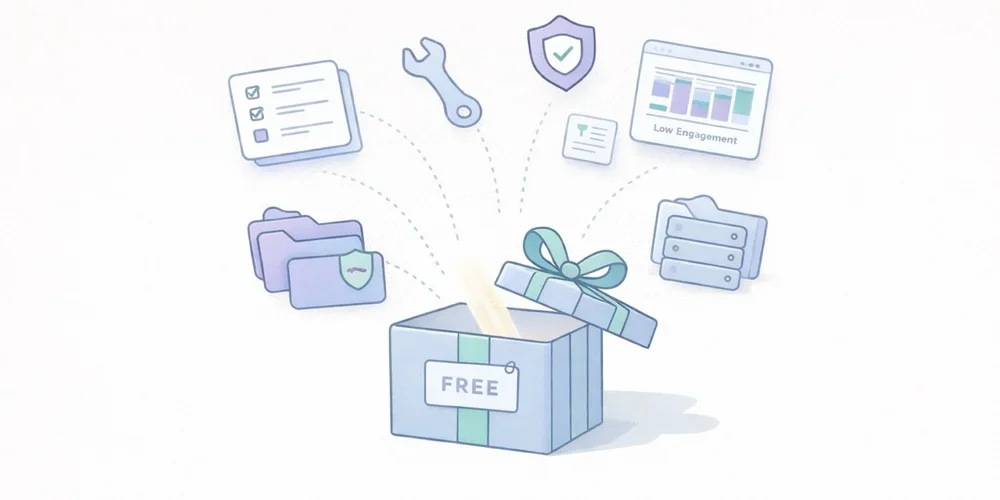
For a long time, the promise sounded simple: web analytics could be free. Install a script, open a dashboard, and start measuring traffic. In 2026, that promise still exists, but it no longer means the same thing across the market.
One recent signal made that especially visible: Piwik PRO ended its free Core plan and now presents its Business plan starting at €35 per month. At the same time, other vendors are taking different paths. Simple Analytics now highlights a limited free plan, Plausible still makes free self-hosting available through Community Edition, Matomo keeps its on-premise core free to download, and Fathom takes the most direct route: free trial first, paid subscription after that.
So the useful question is no longer whether a vendor puts the word free on its pricing page. The useful question is this: free from what, and under which conditions?
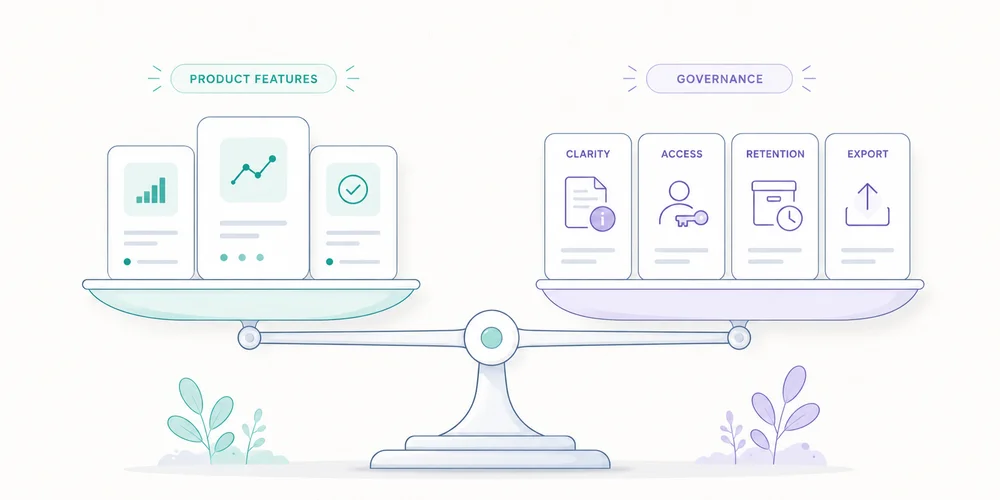
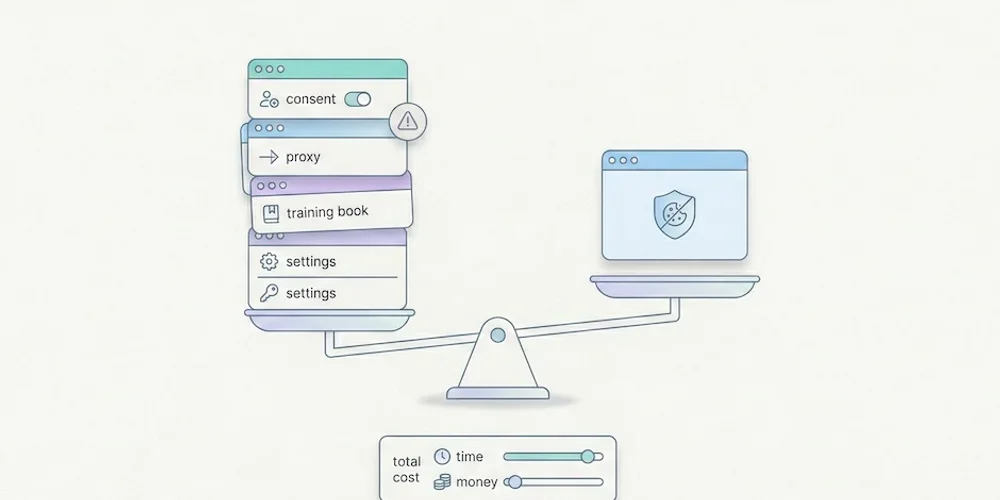
With analytics, you almost always pay somewhere. If not in subscription fees, then in setup time, maintenance burden, governance complexity, compliance work, or dashboards that are technically available but barely used. For SMBs and lean digital teams, that hidden cost usually matters more than the headline price.
This article offers a simple decision framework. The point is not to say that free analytics is dead. The point is to show when it is still a smart choice, when it turns into a false economy, and why a product’s business model has become part of the product itself.
In 2026, “free” covers at least four different models
The main problem with the phrase free analytics is that it lumps together models that are economically very different.
1. Free analytics funded by something else
In this model, analytics is not really the primary product you are paying for. It may be funded by a broader platform, another revenue stream, a growth strategy, or a larger ecosystem.
For the buyer, the upside is obvious. Entry feels frictionless. The downside is that the cost often reappears somewhere else: heavier tooling, more operational dependency, more configuration work, or extra legal complexity when the processing goes beyond strict audience measurement.
This is where the CNIL’s position is useful. The French regulator explicitly notes that some analytics offers fall outside the exemption perimeter when providers reuse data for their own purposes. In other words, a tool can look cheap or free at purchase time and become more expensive later if its purposes need tighter legal framing.
2. Limited freemium
Freemium means durable free access, but with clear limits. The free plan gets you in the door, while monetization happens through volume, number of sites, users, retention, exports, API access, or collaboration features.
In 2026, this is a more credible model than the old “very generous free plan for almost everyone” playbook. It is easier to read. The vendor is effectively saying: the basics stay accessible, and growth pays for the product.
Simple Analytics now presents exactly that kind of structure. Its pricing page offers a 14-day full-feature trial and then the option to move either to a paid plan or to a free plan, depending on usage.
The real signal here is not just price. It is whether the limits make sense. Healthy freemium nudges you to upgrade because your needs expand. Toxic freemium nudges you to upgrade because the free tier is intentionally frustrating.
3. Open-source, self-hosted analytics
This is the classic “free, but” category.
There is no software license to pay. Matomo Core remains free to download and use on your own infrastructure. Plausible Community Edition can still be self-hosted for free. Umami also continues to frame self-hosting as always free.
On paper, this is attractive. You keep control, you choose the infrastructure, and you avoid recurring vendor fees.
In practice, the cost moves rather than disappears. You need servers, backups, updates, monitoring, at least basic security hygiene, and someone who knows what to do when something breaks. Plausible is unusually explicit about this on its self-hosting page: you do not pay them, but you still pay for servers, CDN, backups, and infrastructure, and premium support is not included.
For a technical team with existing infrastructure habits, that trade-off can be perfectly rational. For a non-technical SMB, the “free” label can be misleading.
4. Free trial, then paid subscription
This is the cleanest model. You try the product for a short period, then you pay if you want to keep using it.
Plausible offers a 30-day free trial with no credit card and starts at $9 per month on Starter. Fathom also leads with a 30-day free trial and then starts at $15 per month. Piwik PRO now presents a 30-day trial on its Business plan, starting at €35 per month.
Prices and offers were checked on public vendor pages on May 9, 2026. They can change, so verify the official pages before buying.
The advantage is clarity. The vendor is not pretending that the service can remain free for every serious use case. It is simply giving you time to validate the fit.
For many buyers, that is healthier than a permanently ambiguous free tier.
The real cost of analytics is rarely the entry price
When a team says “we want a free tool,” it usually means something else:
- we do not want to make the stack heavier;
- we do not want a six-week setup project;
- we do not want to pay for features nobody will open;
- we want a dashboard multiple people can understand;
- we want to reduce compliance work rather than move it elsewhere.
That is why list price, on its own, is a weak buying criterion.
Setup cost
A free tool with a confusing model can still cost days of documentation, setup, checks, and internal alignment. That cost is rarely line-itemed, but it is real.
Maintenance cost
This is the most underestimated part of self-hosted analytics. Matomo itself notes that its on-premise version requires a web server, PHP, a MySQL or MariaDB database, and ongoing work around installation, security, updates, and maintenance. The absence of a license fee is real. The absence of operating cost is not.
Governance cost
A free tool may work fine for one person and start to break down as soon as multiple sites, multiple stakeholders, shared access, or client reporting enter the picture. Once analytics becomes a collective object, readability and collaboration stop being optional.
Compliance cost
This is where many comparisons become too loose.
In 2025, the CNIL published a self-assessment tool to help vendors determine whether an analytics solution can fit within the limited audience-measurement perimeter. But it also states clearly that this tool is not meant to assess overall legal compliance.
That matters because it avoids two common mistakes.
The first is assuming that a tool is automatically cheaper overall because there is no license fee, even though it may require heavier legal review or stricter configuration.
The second is assuming that cookieless or privacy-first positioning removes the need for governance and legal framing. That is not what the CNIL says.
The cost of poor adoption
There is one more cost that often stays invisible: the cost of keeping a free tool that nobody really uses.
A dashboard that exists but is rarely consulted may be cheap on paper and expensive in missed decisions. If your team only opens analytics when there is a crisis, or if the tool takes more time to interpret than the actions it is supposed to support, the free label stops being decisive.
The market is more mature, which means it is less naive about free
The end of Piwik PRO’s free plan matters because it reveals a broader market truth. Privacy-first analytics is no longer just a philosophical alternative to Google Analytics. It is a category of products that has to fund hosting, support, security, UX, integrations, collaboration, and sometimes stricter enterprise or regulated-sector requirements.
In other words, the more credible an analytics product becomes for real professional use, the more central its funding model becomes.
That does not mean free plans are doomed. It means sustainable free plans need sustainable economics behind them.
In 2026, three paths look structurally healthier than the old generous-free-for-everyone model:
- a limited free tier that monetizes growth;
- open-source software that is free to self-host while operating costs stay on the buyer side;
- a paid product with a free trial.
The fragile path is the broad, feature-rich free plan with no obvious long-term funding logic.
When free analytics still makes sense
There is no need for overcorrection. Free analytics is still a smart option in several situations.
Case 1: one simple site, one main reader, low organizational complexity
For a brochure site, a small publication, a side project, or a very small company, a free or limited freemium tool may be enough for a long time. If the real need is to understand traffic sources, top pages, a few key conversions, and broad trends, there is no reason to pay too early.
Case 2: real in-house technical autonomy
If your team already knows how to run servers, maintain backups, handle updates, and monitor infrastructure, open-source self-hosting can be a rational choice. In that case, “free” is not naive. You know the operating cost exists, and you accept it because you control it.
Case 3: shortlisting before a buying decision
A good free trial also has real value. It lets the team validate readability, exports, reporting flow, and day-to-day usefulness before making a commitment.
When free turns into a false economy
The opposite signals are usually easy to spot.
You manage multiple sites or multiple stakeholders
As soon as analytics must be shared between marketing, leadership, product, agencies, or clients, the limits of “free first” show up much faster. The tool stops being a counter and becomes part of governance.
Nobody wants to maintain the stack
This is the cleanest self-hosting test. If nobody internally wants to own updates, security, backups, and incident response, then self-hosted free is probably the wrong economic choice.
Your use case goes beyond strict audience measurement
The CNIL’s framework is narrow by design. It is centered on audience measurement and closely related purposes. As soon as the conversation expands toward broader marketing measurement, acquisition analysis, or other forms of reuse, the legal and operational framing gets more complex. A cheap tool can still become expensive to govern properly.
The tool creates more friction than clarity
This is often the decisive one. If your team dreads the dashboard, cannot tell which numbers matter, or keeps rebuilding the same views elsewhere, then the real cost has already outgrown the subscription you were trying to avoid.
A simple decision framework for 2026
To avoid abstract debates, use a practical rule.
Choose limited freemium if you are a small organization with a simple site, straightforward needs, and a desire to get started quickly.
Choose open-source self-hosting if you have genuine technical autonomy, a strong control requirement, and explicit acceptance of operating cost.
Choose a simple paid SaaS if your main problem is not the license fee but lost time, poor dashboard adoption, and weak clarity across teams.
Choose a larger and heavier platform only if you truly need its additional depth, not because the market has trained everyone to confuse complexity with seriousness.
The key is to make the business model fit the actual use case. A tool becomes risky when the way it is funded no longer matches what you expect from it.
What to keep in mind
Free analytics is still viable in 2026, but only if we stop confusing free with simple, durable, or low-friction.
The right buying question is no longer “which tool is cheapest?” It is:
- who really funds the product;
- where the cost moves if I do not pay a license fee;
- who will maintain, explain, and govern the tool;
- when the free model becomes a liability;
- whether the economics still make sense when traffic, team size, or compliance expectations grow.
For many SMBs, the best choice is neither the richest platform nor the absolute cheapest one. It is the tool whose economics are the most honest relative to real usage.
That is one reason privacy-first analytics keeps gaining ground. The strongest products in that segment are not trying to pretend everything should be free forever. They are trying to make measurement lighter, clearer, and more sustainable.
If you are comparing analytics tools in 2026, compare business models as carefully as you compare features.
FAQ
Is a free analytics tool necessarily worse?
No. It can be a very good fit when needs are simple, the team is small, and the limits of the free tier actually match the use case. The issue is not free itself. The issue is whether the real cost has merely been moved elsewhere.
Is self-hosted analytics really free?
It is free in licensing terms, not in operating terms. You still need hosting, backups, updates, security, monitoring, and technical time. For teams that already have those capabilities, that can still be efficient. For non-technical SMBs, not always.
Does privacy-first analytics automatically remove compliance work?
No. It can reduce compliance burden, but it does not remove the need to define purposes, configure the tool properly, inform users, and assess consent requirements where relevant. The CNIL clearly separates audience-measurement exemption analysis from broader compliance assessment.
Why do so many analytics vendors move from generous free plans to paid models?
Because professional analytics products still have to fund infrastructure, support, security, product development, and often collaboration features. When the monetization path behind a generous free plan is weak, vendors usually tighten the offer sooner or later.
Which model is healthiest for an SMB?
In many cases, limited freemium or a small paid SaaS is healthier than a complicated zero-cost setup. Those models tend to be more transparent, more stable, and easier to govern across a real team.
Sources
Sources checked on May 9, 2026.
- CNIL, Cookies and audience measurement solutions
- CNIL, audience-measurement self-assessment tool, July 2025
- Simple Analytics, Pricing
- Plausible, Pricing
- Plausible, Self-hosted web analytics
- Matomo, Is Matomo truly free to use?
- Matomo, On-Premise user guide
- Fathom, Pricing and free trial
- Piwik PRO, Business plan
- Piwik PRO Community, Will the free Piwik PRO remain active after February 2026?
- Umami, Pricing