
Tag: Plausible
All blog posts with this tag.
- 09 Mar, 2026
Is free analytics still viable in 2026? The real cost of privacy-first freemium
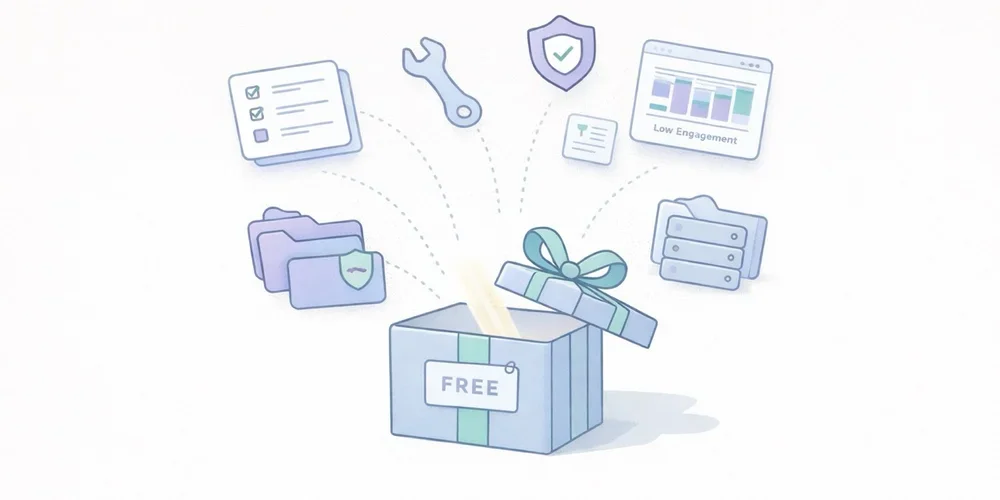
For a long time, the promise sounded simple: web analytics could be free. Install a script, open a dashboard, and start measuring traffic. In 2026, that promise still exists, but it no longer means the same thing across the market. One recent signal made that especially visible: Piwik PRO ended its free Core plan and now presents its Business plan starting at €35 per month. At the same time, other vendors are taking different paths. Simple Analytics now highlights a limited free plan, Plausible still makes free self-hosting available through Community Edition, Matomo keeps its on-premise core free to download, and Fathom takes the most direct route: free trial first, paid subscription after that. So the useful question is no longer whether a vendor puts the word free on its pricing page. The useful question is this: free from what, and under which conditions? With analytics, you almost always pay somewhere. If not in subscription fees, then in setup time, maintenance burden, governance complexity, compliance work, or dashboards that are technically available but barely used. For SMBs and lean digital teams, that hidden cost usually matters more than the headline price. This article offers a simple decision framework. The point is not to say that free analytics is dead. The point is to show when it is still a smart choice, when it turns into a false economy, and why a product’s business model has become part of the product itself. In 2026, "free" covers at least four different models The main problem with the phrase free analytics is that it lumps together models that are economically very different. 1. Free analytics funded by something else In this model, analytics is not really the primary product you are paying for. It may be funded by a broader platform, another revenue stream, a growth strategy, or a larger ecosystem. For the buyer, the upside is obvious. Entry feels frictionless. The downside is that the cost often reappears somewhere else: heavier tooling, more operational dependency, more configuration work, or extra legal complexity when the processing goes beyond audience measurement. This is where the CNIL’s position is useful. The French regulator explicitly notes that some analytics offers fall outside the exemption perimeter when providers reuse data for their own purposes. In other words, a tool can look cheap or free at purchase time and become more expensive later if its purposes need tighter legal framing. 2. Limited freemium Freemium means durable free access, but with clear limits. The free plan gets you in the door, while monetization happens through volume, number of sites, users, retention, exports, API access, or collaboration features. In 2026, this is a more credible model than the old “very generous free plan for almost everyone” playbook. It is easier to read. The vendor is effectively saying: the basics stay accessible, and growth pays for the product. Simple Analytics now presents exactly that kind of structure. Its pricing page offers a 14-day full-feature trial and then the option to move either to a paid plan or to a free plan, depending on usage. Check whether the free tier supports a real use case, and at what point your volume or requirements would make a paid subscription necessary. 3. Open-source, self-hosted analytics This is the classic “free, but” category. There is no software license to pay. Matomo Core remains free to download and use on your own infrastructure. Plausible Community Edition can still be self-hosted for free. Umami also continues to frame self-hosting as always free. On paper, this is attractive. You keep control, you choose the infrastructure, and you avoid recurring vendor fees. In practice, the cost moves rather than disappears. You need servers, backups, updates, monitoring, at least basic security hygiene, and someone who knows what to do when something breaks. Plausible is unusually explicit about this on its self-hosting page: you do not pay them, but you still pay for servers, CDN, backups, and infrastructure, and premium support is not included. For a technical team with existing infrastructure habits, that trade-off can be perfectly rational. For a non-technical SMB, the “free” label can be misleading. 4. Free trial, then paid subscription This is the cleanest model. You try the product for a short period, then you pay if you want to keep using it. Plausible offers a 30-day free trial with no credit card and starts at $9 per month on Starter. Fathom also leads with a 30-day free trial and then starts at $15 per month. Piwik PRO now presents a 30-day trial on its Business plan, starting at €35 per month. Prices and offers were checked on public vendor pages on May 9, 2026. They can change, so verify the official pages before buying. The advantage is clarity. The vendor is not pretending that the service can remain free for every serious use case. It is simply giving you time to validate the fit. For many buyers, that is healthier than a permanently ambiguous free tier. The real cost of analytics is rarely the entry price When a team says “we want a free tool,” it usually means something else:we do not want to make the stack heavier; we do not want a six-week setup project; we do not want to pay for features nobody will open; we want a dashboard multiple people can understand; we want to reduce compliance work rather than move it elsewhere.That is why list price, on its own, is a weak buying criterion. Setup cost A free tool with a confusing model can still cost days of documentation, setup, checks, and internal alignment. That cost is rarely line-itemed, but it is real. Maintenance cost This is the most underestimated part of self-hosted analytics. Matomo itself notes that its on-premise version requires a web server, PHP, a MySQL or MariaDB database, and ongoing work around installation, security, updates, and maintenance. The absence of a license fee is real. The absence of operating cost is not. Governance cost A free tool may work fine for one person and start to break down as soon as multiple sites, multiple stakeholders, shared access, or client reporting enter the picture. Once analytics becomes a collective object, readability and collaboration stop being optional. Compliance cost This is where many comparisons become too loose. In 2025, the CNIL published a self-assessment tool to help vendors determine whether an analytics solution can fit within the limited audience-measurement perimeter. But it also states clearly that this tool is not meant to assess overall legal compliance. That matters because it avoids two common mistakes. The first is assuming that a tool is automatically cheaper overall because there is no license fee, even though it may require heavier legal review or stricter configuration. The second is assuming that cookieless or privacy-first positioning removes the need for governance and legal framing. That is not what the CNIL says. The cost of poor adoption There is one more cost that often stays invisible: the cost of keeping a free tool that nobody really uses. A dashboard that exists but is rarely consulted may be cheap on paper and expensive in missed decisions. If your team only opens analytics when there is a crisis, or if the tool takes more time to interpret than the actions it is supposed to support, the free label stops being decisive. The market is more mature, which means it is less naive about free The end of Piwik PRO’s free plan matters because it reveals a broader market truth. Privacy-first analytics is no longer just a philosophical alternative to Google Analytics. It is a category of products that has to fund hosting, support, security, UX, integrations, collaboration, and sometimes stricter enterprise or regulated-sector requirements. In other words, the more credible an analytics product becomes for real professional use, the more central its funding model becomes. That does not mean free plans are doomed. It means sustainable free plans need sustainable economics behind them. In 2026, three paths look structurally healthier than the old generous-free-for-everyone model:a limited free tier that monetizes growth; open-source software that is free to self-host while operating costs stay on the buyer side; a paid product with a free trial.The fragile path is the broad, feature-rich free plan with no obvious long-term funding logic. When free analytics still makes sense There is no need for overcorrection. Free analytics is still a smart option in several situations. Case 1: one simple site, one main reader, low organizational complexity For a brochure site, a small publication, a side project, or a very small company, a free or limited freemium tool may be enough for a long time. If the real need is to understand traffic sources, top pages, a few key conversions, and broad trends, there is no reason to pay too early. Case 2: real in-house technical autonomy If your team already knows how to run servers, maintain backups, handle updates, and monitor infrastructure, open-source self-hosting can be a rational choice. In that case, “free” is not naive. You know the operating cost exists, and you accept it because you control it. Case 3: shortlisting before a buying decision A good free trial also has real value. It lets the team validate readability, exports, reporting flow, and day-to-day usefulness before making a commitment. When free turns into a false economy The opposite signals are usually easy to spot. You manage multiple sites or multiple stakeholders As soon as analytics must be shared between marketing, leadership, product, agencies, or clients, the limits of “free first” show up much faster. The tool stops being a counter and becomes part of governance. Nobody wants to maintain the stack This is the cleanest self-hosting test. If nobody internally wants to own updates, security, backups, and incident response, then self-hosted free is probably the wrong economic choice. Your use case goes beyond audience measurement The CNIL’s framework is narrow by design. It is centered on audience measurement and closely related purposes. As soon as the conversation expands toward broader marketing measurement, acquisition analysis, or other forms of reuse, the legal and operational framing gets more complex. A cheap tool can still become expensive to govern properly. The tool creates more friction than clarity This is often the decisive one. If your team dreads the dashboard, cannot tell which numbers matter, or keeps rebuilding the same views elsewhere, then the real cost has already outgrown the subscription you were trying to avoid. A simple decision framework for 2026 To avoid abstract debates, use a practical rule. Choose limited freemium if you are a small organization with a simple site, straightforward needs, and a desire to get started quickly. Choose open-source self-hosting if you have genuine technical autonomy, a strong control requirement, and explicit acceptance of operating cost. Choose a simple paid SaaS if your main problem is not the license fee but lost time, poor dashboard adoption, and weak clarity across teams. Choose a larger and heavier platform only if you truly need its additional depth, not because the market has trained everyone to confuse complexity with seriousness. The key is to make the business model fit the actual use case. A tool becomes risky when the way it is funded no longer matches what you expect from it. What to keep in mind Free analytics is still viable in 2026, but only if we stop confusing free with simple, durable, or low-friction. The right buying question is no longer “which tool is cheapest?” It is:who really funds the product; where the cost moves if I do not pay a license fee; who will maintain, explain, and govern the tool; when the free model becomes a liability; whether the economics still make sense when traffic, team size, or compliance expectations grow.For many SMBs, the best choice is neither the richest platform nor the absolute cheapest one. It is the tool whose economics are the most honest relative to real usage. That is one reason privacy-first analytics keeps gaining ground. The strongest products in that segment are not trying to pretend everything should be free forever. They are trying to make measurement lighter, clearer, and more sustainable. If you are comparing analytics tools in 2026, compare business models as carefully as you compare features. FAQ Is a free analytics tool necessarily worse? No. It can be a very good fit when needs are simple, the team is small, and the limits of the free tier actually match the use case. The issue is not free itself. The issue is whether the real cost has merely been moved elsewhere. Is self-hosted analytics really free? It is free in licensing terms, not in operating terms. You still need hosting, backups, updates, security, monitoring, and technical time. For teams that already have those capabilities, that can still be efficient. For non-technical SMBs, not always. Does privacy-first analytics automatically remove compliance work? No. It can reduce compliance burden, but it does not remove the need to define purposes, configure the tool properly, inform users, and assess consent requirements where relevant. The CNIL clearly separates audience-measurement exemption analysis from broader compliance assessment. Why do so many analytics vendors move from generous free plans to paid models? Because professional analytics products still have to fund infrastructure, support, security, product development, and often collaboration features. When the monetization path behind a generous free plan is weak, vendors usually tighten the offer sooner or later. Which model is healthiest for an SMB? In many cases, limited freemium or a small paid SaaS is healthier than a complicated zero-cost setup. Those models tend to be more transparent, more stable, and easier to govern across a real team. Sources Sources checked on May 9, 2026.CNIL, Cookies and audience measurement solutions CNIL, audience-measurement self-assessment tool, July 2025 Simple Analytics, Pricing Plausible, Pricing Plausible, Self-hosted web analytics Matomo, Is Matomo truly free to use? Matomo, On-Premise user guide Fathom, Pricing and free trial Piwik PRO, Business plan Piwik PRO Community, Will the free Piwik PRO remain active after February 2026? Umami, Pricing
- 02 Mar, 2026
Plausible vs Fathom vs Simple Analytics: a practical 2026 comparison
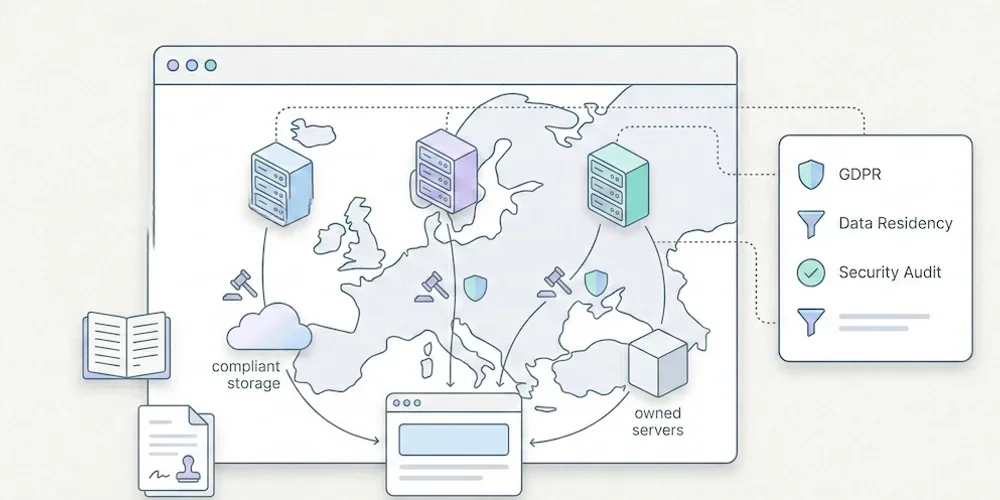
Plausible, Fathom and Simple Analytics sit in the same broad category: lightweight, privacy-first web analytics for teams that do not want the complexity of GA4 or an enterprise analytics suite. They are not interchangeable, though. The right choice depends on your traffic volume, team model, reporting needs, hosting expectations and internal privacy review. Prices and packaging change often. The prices below come from public vendor pages read on November 15, 2026; the other points come from pages checked on May 9, 2026. Always verify the current vendor page before buying. We build Pomelo Analytics, which appears at the end of this page: we are not a neutral party. The short version Choose Plausible if you want an established open-source product, a clean dashboard, a self-hosting route and detailed documentation around subscription tiers. Choose Fathom if you want a simple paid SaaS with a deliberately small feature surface and straightforward multi-site pricing. Choose Simple Analytics if you want a Netherlands-based product with a clearly documented privacy posture, simple reports and a free entry point within the vendor's published limits. Comparison table Prices are in the currency and billing period shown by each vendor, read on November 15, 2026.Criterion Plausible Fathom Simple AnalyticsEntry price $9/month (Starter), $14 (Growth), $19 (Business), billed monthly, at 10k monthly pageviews and events $15/month, billed monthly, up to 100,000 pageviews €20/month for the paid self-serve plan, billed monthly; slider from 100k to 2.5M pageviewsWhat the volume counts Pageviews and custom events, across all sites of a team Pageviews and custom events, across all sites "Data points", which the pricing page does not define furtherSites Starter: 1 site; Growth and Business: several sites 50 sites included; extra packs of 50 at $10/month Not stated for the paid plan; free plan: 5 websitesUsers Starter: no team members; Growth and Business: team members Not stated 1 user included, €20/month per extra userTrial or free plan 30-day trial, no card required 7-day trial, card required; no free plan Free plan for hobby sites: 1 month of history, badge requiredAnnual billing "2 months free" "2 months free" "2 months free"Self-hosting Community Edition available Not stated on the pricing page Not stated on the pricing pageOver the limit One month over: no action. Two months in a row: asked to upgrade; dashboards may be locked, collection continues Two months in a row: contacted; dashboard and API access may be paused, collection continues Annual billing: email notice, one week to raise the limit, or it is raised for you. Monthly billing: the price changes with usagePrivacy posture is a configuration question All three vendors position themselves around privacy-first analytics, but a vendor promise is not the same as your live setup. Your team still needs to document:what the script collects; whether events or campaign parameters add personal or sensitive context; retention periods; provider role and data-processing terms; transfers and hosting location; whether other trackers on the same site change the consent analysis.For each tool, distinguish baseline audience measurement from events, campaigns and other data added through configuration. Check the installation defaults and what changes when you enable additional capabilities. Pricing should be compared at your real volume Do not compare only entry prices, and do not compare volumes across tools as if they were the same unit: the table above shows three different ways of counting. Model the cost at your actual monthly pageviews, number of sites, number of users, retention needs and export/API expectations. For example, a tool that is cheaper at 10,000 monthly pageviews may be more expensive at 500,000. A self-hosted option may reduce subscription fees but add infrastructure, backup and maintenance cost. A plan with generous site limits may be cheaper for an agency than a plan priced per site. Reporting quality matters more than feature count The best analytics tool is the one the team actually reads. Before buying, ask the person who will use the dashboard every week to answer three questions from a trial account:Which acquisition sources are working? Which content or pages deserve action? Which conversions changed materially since last period?If the tool cannot answer those questions quickly, more reports will not fix the problem. Why Pomelo Analytics Plausible, Fathom and Simple Analytics all bring privacy-first measurement. Pomelo Analytics, the tool we build, adds one idea: measure right. Not more data, but numbers you can trust, read at a glance and share across several sites.Numbers you can trust. Every key metric is explained in the interface. Counts are exact; from 1 to 9 visits, Pomelo shows "< 10" rather than false precision, and an unknown value never appears as zero. A fair collection. Audience measurement with no measurement cookie and no cross-site tracking: the IP address is not kept in measurement data, and statistics are aggregated. The Campaigns option adds channels, UTM and conversions by source, with your visitors’ consent. All your sites in one view. One workspace for every site, with the right people and the right access. A fair price. Plans follow your scale (sites, events, members, history), starting with a free plan. Data hosted in Europe, on AWS Stockholm.Pomelo is in pre-launch and counts events, so its volumes do not compare directly with the pageviews above. The launch grid, excluding tax: Free (€0, 5 sites, 100k events per month, 60 days of history), Starter (€7 per month, 10 sites, 500k events, 24 months) and Pro (€24 per month, 50 sites, 3M events, 24 months); every plan includes every report. These plans are not yet open for public sign-up. Pomelo is built for European SMBs, B2B SaaS and digital teams that run several sites together. Access opens gradually: join the Pomelo Analytics waitlist. For other comparisons, see the general guide to Google Analytics, Matomo and lightweight tools, the Google Analytics alternative and the Matomo alternative. Sources Prices read on November 15, 2026; the privacy and feature pages were checked on May 9, 2026.Plausible, subscription plans Plausible, data policy Fathom, pricing Fathom, features Simple Analytics, pricing Simple Analytics, what we collect
- 23 Feb, 2026
Google Analytics, Matomo, or a Lightweight Tool? The 2026 Guide
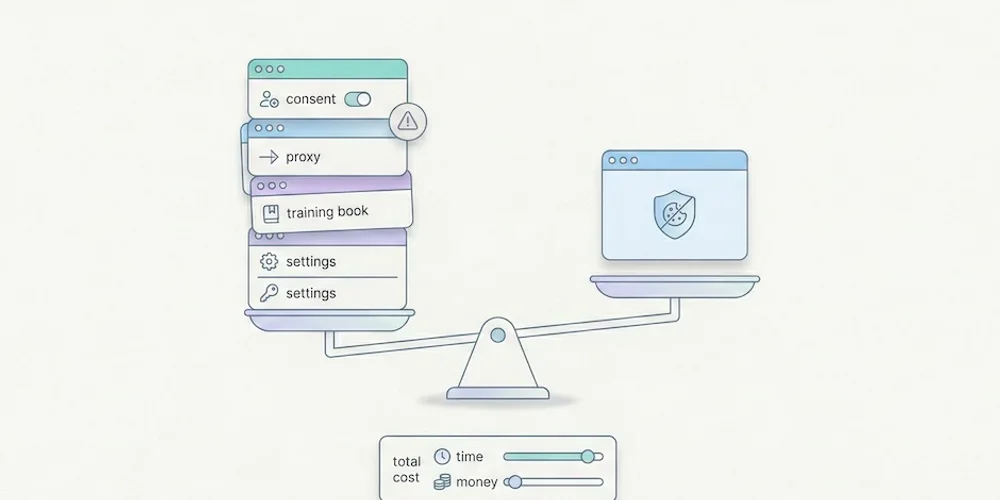
Choosing web analytics means comparing reports, collection practices, permissions and maintenance work. For a small business, these considerations matter as much as the subscription price. Should you stick with the American giant? Switch to open-source? Try the new wave of minimalist tools? And most importantly: what does each option actually cost? To help you decide, we've classified the main solutions into three families, analyzed their real strengths and weaknesses, and compiled a pricing table based on each vendor's public data. The goal isn't to pick a "winner": it's to give you the information you need to choose the tool that fits your situation.Family 1: The "Data-Centric" Giants (GA4, Adobe Analytics) This is the historical standard. These tools are built to ingest massive amounts of data and produce advanced analysis. Who is this for? Large enterprises, e-commerce businesses with complex multi-channel attribution needs, and teams with a dedicated Data Analyst. If you need custom attribution models, behavioral cohort analysis, or deep integration with advertising platforms, this is your segment. The advantage Raw power. You can segment everything, cross-reference everything, and connect it all to the Google (or Adobe) advertising ecosystem. Native integration with Google Ads, Google Search Console, and BigQuery is a genuine asset for advanced marketing teams. The trap A team mainly checking sources, pages and conversions should test how quickly it can find those answers. GA4 explorations and custom reports may require more setup than that team needs. Privacy compliance is another pain point. Multiple European Data Protection Authorities (DPAs), including the French CNIL, the Austrian DSB, and the Italian Garante, have issued decisions finding that Google Analytics transfers to the US did not comply with GDPR. Google has since modified its infrastructure (EU hosting, advanced consent mode), but the analysis and configuration required to assess and operate GA4 properly remain technical and costly, server-side proxying, advanced consent setup, granular collection controls. For most SMBs, it's out of reach. → Source: CNIL - Google Analytics and US data transfersFamily 2: The "Self-Hosted" (Matomo On-Premise, Umami, PostHog) This is the historical answer for teams that need full control over hosting. You install the software on your own server. You operate the infrastructure yourself. Who is this for? IT departments, public-sector organizations, and teams with in-house technical staff and a strong requirement for total control over hosting. Matomo is particularly widespread in European public institutions and large organizations that need to pass compliance audits. The advantage Stronger control, provided you also control the infrastructure, processors, backups, and configuration. Matomo On-Premise is free to download and offers a very comprehensive feature set (far richer than most lightweight alternatives): funnels, heatmaps (via plugins), A/B testing, e-commerce tracking. Umami and PostHog (in their open-source versions) offer a more modern, lightweight alternative to Matomo for technical teams who want to self-host without Matomo's historical complexity. The trap "Free to install" doesn't mean free to operate. You need to manage security updates, database scaling, backups, and occasional performance issues as traffic grows. For an SMB without a dedicated sysadmin, the real cost (time + hosting + maintenance) often exceeds that of a paid SaaS. Matomo's interface also reproduces the complexity of the previous generation of analytics tools: many menus, many reports, many configuration options. That's a strength for experts, but an obstacle for a business owner who wants an answer in 30 seconds. Matomo also offers a Cloud version (hosted by them) priced by monthly hit tier (from 50,000 hits per month, excluding tax), which eliminates server maintenance but keeps the interface complexity. → Source: Matomo Cloud PricingFamily 3: The Lightweight New Wave (European SaaS, Privacy-First) This is the defining trend of 2025-2026. Paid but affordable tools, often hosted in Europe, designed from day one for simplicity and privacy-first collection. Their shared promise: a dashboard you can read in 5 minutes, with minimal collection and a clearer privacy posture. Who is this for? European SMBs, B2B SaaS teams, multi-site digital teams, and web agencies who want reliable stats without managing technical infrastructure or analytics sprawl. If your needs boil down to "Where do my visitors come from, what do they look at, and do they contact me?", you're in the right segment. The advantage Peace of mind, when the configuration is actually kept minimal. These tools typically avoid measurement cookies, reduce the need for complex tag management, and offer an immediately readable interface. In some jurisdictions, a strictly configured audience-measurement setup can reduce consent burden, but that remains a configuration and legal review question, not a promise attached to a logo. The trade-off Simplicity has a functional cost. If you need 12-step conversion funnels, predictive cohorts, cross-device tracking, or advanced advertising integrations, these tools will be too limited. That's a deliberate design choice: measure what matters rather than measure everything. The main players Here are the most established solutions in this category, with their distinctive characteristics: Plausible Analytics (Estonia, open-source): the best known of the group, with a minimal dashboard. Open-source, with a self-hosted Community Edition. Fathom Analytics (Canada): a paid-only product with a minimal interface. No free plan; the entry plan includes 50 sites. Simple Analytics (Netherlands): paid plans and a free plan for hobby sites, with limits listed in the table below. The vendor states that it collects no personal data; teams should still verify that against their configuration, integrations, and any other trackers present on the site. Pirsch (Germany): cloud hosting in Germany, and on-premise self-hosting also offered. Umami (open-source, cloud or self-hosted): free when self-hosted. The cloud version has a free Hobby plan within the limits listed below.Prices at November 15, 2026 Prices come from the public vendor pages read on November 15, 2026, in the currency and billing period shown below. They change often: check the vendor page before deciding. Tools do not count the same thing, so the volumes below are not interchangeable: Plausible and Fathom count pageviews and custom events together, Matomo counts "hits" (page views, events, downloads, outlinks, site searches and content requests), Umami counts events, and Simple Analytics bills on "data points" that its pricing page does not define further.Tool Entry price Unit and volume Sites Trial or free planPlausible $9/month (Starter), $14 (Growth), $19 (Business), billed monthly, at 10k monthly pageviews and events Pageviews and custom events, per team Starter: 1 site; Growth and Business: several 30-day trial, no card requiredFathom $15/month, billed monthly, up to 100,000 pageviews Pageviews and custom events 50 sites included 7-day trial, card required; no free planSimple Analytics €20/month for the paid self-serve plan, billed monthly; the volume slider runs from 100k to 2.5M pageviews "Data points", per month Not stated for the paid plan Free plan for hobby sites: 5 websites, 1 month of history, badge requiredMatomo Cloud Monthly tiers starting at 50,000 hits; see the vendor page for the price of each tier Hits, per month Not stated Free trial, no card; On-Premise Community edition free, forum support onlyPirsch $6/month for 10,000 monthly pageviews, billed monthly or annually Pageviews, custom events and 10% of session extensions 50 sites on the Standard plan 30-day trial, no card requiredUmami Cloud Pro $20/month, billed monthly, 1 million events Events Pro: up to 20 sites Hobby plan free: 100K events, 1 site, 6 months of history; 14-day trialAnnual billing is offered by Plausible, Fathom, Simple Analytics and Matomo with "2 months free" on their pages. GA4 is free to license, but the real cost includes setup, training and privacy framing, which every organization should estimate honestly. → Price sources, read on November 15, 2026: Plausible and Plausible plans, Fathom, Simple Analytics, Matomo, Pirsch, UmamiThe Decision Checklist Before switching, use these five questions to rule out tools that do not fit your requirements, budget or technical resources. 1. Do I need detailed demographic data (age, gender, interests)?Yes → GA4 or Matomo may still be relevant, with a consent-first setup and CMP governance. No → Move to a lightweight tool. The 5 essential KPIs are enough for most websites.2. Who will look at the stats regularly?A data expert or dedicated analyst → GA4 or Matomo. The power justifies the complexity. The founder, a marketer, or a freelancer managing multiple clients → Lightweight tool. A dashboard you understand in 30 seconds is worth more than a 200-metric report nobody reads.3. What's my real budget (time + money)?GA4 is free to license but costly in time: training (expect several hours to learn the basics), privacy/GDPR framing, consent maintenance. Matomo On-Premise is free to license but costly in server maintenance: updates, security, database management. Matomo Cloud is paid (priced by monthly hit tier, excluding tax) and still complex to use. Lightweight tools are paid, but total cost of ownership can stay low: fast setup, lighter maintenance, lighter onboarding.4. Is data privacy a selling point for my business? If you're an agency, a freelancer, or a company whose clients are privacy-sensitive, showing minimal collection and clear documentation is a concrete commercial advantage. As we explain in our article on data obesity, measuring right is a strategic choice, not a limitation. 5. Do I need self-hosting?Yes (regulatory obligation, internal policy) → Matomo On-Premise, Umami, or Plausible (self-hosted). No → European SaaS cloud solutions offer an excellent hosting-control/simplicity trade-off.Our Recommendation Grid by ProfileYour profile Our recommendation WhySmall business / brochure site Lightweight tool (Plausible, Pirsch, etc.) Simplicity, limited collection, predictable cost.SMB with marketing team Lightweight tool or Matomo Cloud Depends on need for advanced features (funnels, A/B testing).Complex e-commerce Matomo or GA4 Need for attribution, detailed e-commerce tracking.Agency / Multi-client freelancer Multi-site lightweight tool Time saved on reporting, simplicity for clients.Government / Public sector Matomo On-Premise Requirement for total control and self-hosting.Developer / Side project Umami (self-hosted) or free tier Free, lightweight, open-source.2026 Trends to Watch Two developments deserve close attention. AI traffic. With ChatGPT, Perplexity, Claude, and Google SGE becoming referral traffic sources, the ability of an analytics tool to identify and categorize AI-driven visits is becoming a differentiator. It's a topic to follow for every vendor; check how each tool handles it before you decide. The analytics-compliance convergence. The boundary between "analytics tool" and "governance tool" is blurring. Solutions that build minimal collection, pseudonymization, clear configuration, and documentation into the product have a structural advantage over those that treat privacy as an afterthought.Where Pomelo Analytics fits We build Pomelo Analytics, so read this section as ours. Pomelo is in pre-launch: access is by invitation and waitlist, and the plans below are the launch grid, not yet open for public sign-up.Plan Price per month, excl. tax Sites Events per month History MembersFree €0 5 100k 60 days 1Starter €7 10 500k 24 months 3Pro €24 50 3M 24 months UnlimitedAnnual billing counts ten months out of twelve. Every plan includes every report; plans differ by scale (sites, events, members, history, API), and none removes a report from audience measurement. Pomelo counts events, so its volumes are not directly comparable with the pageview or hit volumes above. It suits European SMBs, B2B SaaS and teams that run several sites together and want exact numbers and a fair collection. To compare more closely, read Plausible vs Fathom vs Simple Analytics, the Google Analytics alternative and the Matomo alternative pages. To request access, join the Pomelo Analytics waitlist.Conclusion The "best" analytics tool is no longer the one with the most features. It's the one that your team actually uses, every week, to make concrete decisions. Ask future users to produce their usual report in each shortlisted tool. Compare the time needed, difficulties encountered and questions left unanswered before choosing. Before choosing, start by identifying the 5 KPIs that truly matter for your business. The tool will follow.FAQ: Choosing Your Analytics in 2026 What's the best cookieless analytics tool for small businesses? There's no universal "best," but for SMBs wanting simplicity and a privacy-first posture, European lightweight tools (Plausible, Pirsch, Simple Analytics) are often a good fit. Many of them say they work without measurement cookies, and they install quickly. Whether a specific setup can reduce consent burden depends on the exact configuration, local rules, and the rest of your tracker stack. How should I evaluate Plausible's GDPR posture? Plausible is designed for privacy-first analytics and does not use cookies for measurement. Its positioning can be useful for European teams, but you should still document your configuration, hosting, retention, and any surrounding trackers instead of treating a vendor claim as a complete legal conclusion. How much does Matomo Cloud cost? Matomo Cloud is priced by monthly hit tier, starting at 50,000 hits per month, excluding tax. A hit is a page view, event, download, outlink, site search or content request, so check the current price of your tier on Matomo's pricing page. The On-Premise version (self-hosted) is free to license, but the real cost includes server hosting and maintenance time. Can I migrate from GA4 to a lightweight tool without losing historical data? Some vendors offer to import Google Analytics history: check the vendor's documentation. In any case, the level of detail you can import is limited to aggregated metrics. GA4's "user-level" data (profiles, individual journeys) is not transferable, which is consistent with the privacy-first approach. For a smooth transition, it's common to run both tools in parallel for 1 to 3 months. Is Google Analytics banned in France? No, Google Analytics is not "banned" in France in a strict sense. The CNIL (French DPA) issued formal notices to several websites using GA in 2022 for non-compliant US data transfers. Since then, Google has strengthened its European infrastructure and introduced "Consent Mode v2." However, the analysis and configuration required to operate GA4 properly remain complex and require technical expertise. For most SMBs, European alternatives can offer a setup that is easier to document when needs stay limited. SourcesCNIL, Google Analytics and US data transfers CNIL, audience measurement solutions Google Privacy Sandbox, next steps for Chrome tracking protections Google Search Central, Core Web Vitals and Google Search results Price sources read on November 15, 2026: Plausible pricing, Plausible plans, Matomo pricing, Simple Analytics pricing, Fathom pricing, Pirsch pricing, Umami pricing

Just the right measure, for all your websites.
Pomelo is opening gradually. Join the first teams measuring right and help shape what comes next.