Tag: Privacy first
All blog posts with this tag.
- 29 Jun, 2026
How to choose an analytics tool: a 15-question governance scorecard
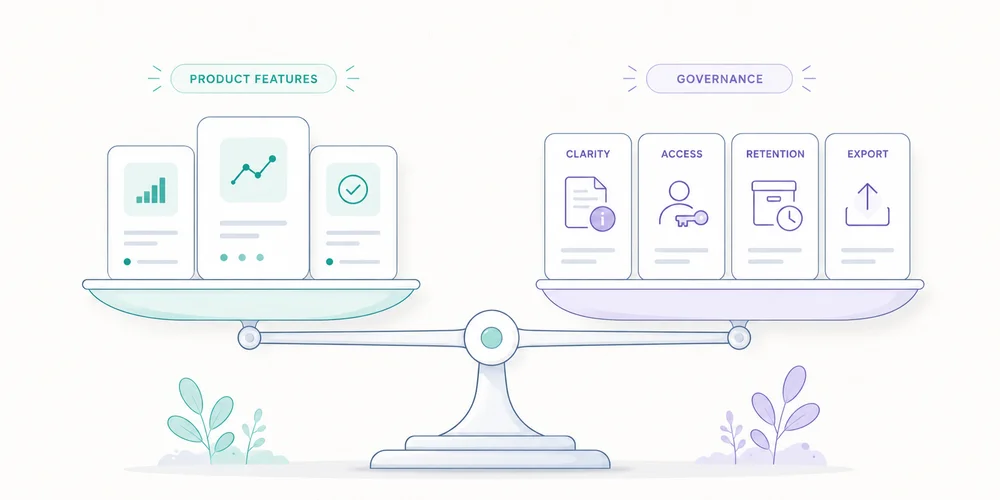
Analytics comparisons often begin with feature lists and end with an overall score that assumes every team wants the same thing. They do not. A B2B small business measuring three sites, sharing reports with an agency and limiting collection has different constraints from an ecommerce group connected to advertising platforms. A technical team willing to operate self-hosted software makes a different trade-off from a marketing team without systems administration. The best tool is not the one with the most features. It is the one whose capabilities, defaults and governance model fit the need. The existing Google Analytics, Matomo and lightweight analytics comparison explains the main families. This scorecard supports an actual procurement decision without relying on a static ranking or prices that will change. Write the problem before scoring tools A serious selection fits on one page before the first demo. Decisions to support List five to ten decisions:Which channels create qualified requests? Which landing pages contribute to conversion? Which content is used? Which sites are growing or declining? Which product events matter? Where did collection break?“Collect all the data” is not a decision. Users Identify marketing, product, management, agency, analyst, engineering, privacy and external-client roles. The key issue is not only user count. It is rights, skills and usage frequency. Constraints Document site count, expected volume, countries, consent requirements, prohibited data, retention, integrations, budget, operating capacity, migration timeline and contractual requirements. This prevents a polished demo from replacing analysis. The 15-question scorecard Score each tool from 0 to 3:0: unavailable or incompatible; 1: possible with a major workaround; 2: covered with acceptable configuration or limits; 3: naturally supported and documented.Apply a weight from 1 to 3 for your organisation. 1. Can it answer business questions without heavy reconstruction? Test five scenarios, such as campaign landing pages, demo requests, three-site comparison, monthly export and traffic-drop diagnosis. A powerful tool that real users cannot operate is expensive. 2. What granularity is genuinely required? Separate aggregate statistics, events, journeys, cohorts, funnels, user identifiers, advertising data and session replay. Each layer adds capability and governance. A team using only pages, sources and conversions should not select primarily for detailed behavioural analysis. 3. What does the default setup collect? Check cookies or identifiers, IP address, full URL, user-agent, geography, advertising IDs, automatic events, query parameters and cross-site signals. Use the URL parameter audit and inspect a test payload. A default aligned with policy scores better because every option to disable is configuration debt. 4. Are strict and extended modes clearly separated? Some teams want minimal measurement by default where the local framework allows it, with extended capabilities after consent. Assess configuration separation, pre-consent behaviour, signal propagation, accidental activation risk, change history and documentation. A vague privacy switch is not enough. 5. Can you explain the data flow? You should be able to state where requests arrive, which transformations occur, where data are stored, which subprocessors participate, whether the vendor reuses data, which support access exists and which transfers apply. Use the data collection summary as the evaluation format. 6. Do location and transfers fit your constraints? Assess hosting region, contracting entity, subprocessors, remote access, transfer mechanisms and self-hosting options separately. “EU hosted” is one fact, not a complete assessment. Self-hosting provides control while transferring operational duties to the team. 7. Can retention, deletion and backups be governed? Ask about available periods, raw versus aggregate data, automatic deletion, property-level deletion, backup purge, exports, contract-end deletion and operational evidence. Unlimited default retention is not neutral. 8. Do multi-site permissions fit? Test per-site roles, groups, agency access, read-only access, exports, admin logs, SSO where needed, offboarding and portfolio views. The multi-site dashboard model turns these into practical scenarios. 9. How does it handle data quality? Review bots, test environments, duplicates, invalid events, unknown parameters, ingestion delay, definition changes, alerts, time zones and cardinality. A simple report without diagnostics may be too shallow. A rich platform with opaque transformations may be hard to audit. 10. Can events and conversions remain governed? Test event creation, change and deprecation. Can schemas be validated? Can fields be forbidden? Are changes versioned? Do historical goals remain understandable? Can an agency change collection without approval? Easy event creation is not always an advantage. Missing guardrails quickly creates an unreadable taxonomy. 11. Is acquisition readable without excessive setup? Test source and medium, UTM campaigns, referrers, direct, landing pages, conversions, custom channels and only the attribution models you genuinely need. Platforms can classify the same journey differently. Ask how rules are defined and changed. 12. Can history be migrated and compared? Check import availability, format, granularity, supported metrics, cost, duration, definition differences, source-data preservation and break-point labelling. An import does not erase differences in sessions, visitors or conversions. 13. Is cost predictable at your scale? Include subscription by volume, overages, sites, users, modules, storage, hosting, maintenance, support, consent management, configuration time, manual reporting, migration and exit. For self-hosting, include updates, backups, monitoring, security and availability. For SaaS, model traffic growth and plan-gated features. Verify prices at decision time. 14. What operating burden can the team sustain? List installation, configuration, tests, maintenance, access, compliance, alerts, backups, support, training and documentation. A free tool can be expensive to operate. A simple tool can be expensive if every useful question requires manual exports. 15. Can you exit cleanly? Evaluate full export, open formats, API, post-cancellation access, deletion, portable configuration, event recovery, definition history and proprietary identifier dependence. A good fit today can still create future debt through lock-in. A weighting example For a multi-site B2B SaaS company:Criterion WeightBusiness questions 3Granularity 2Default collection 3Strict/extended separation 3Data flow 3Location and transfers 2Retention and deletion 3Multi-site access 3Data quality 2Event governance 2Acquisition 2Migration 2Total cost 3Operating burden 3Reversibility 2Calculate: sum(score × weight) / sum(3 × weight)A percentage is convenient, but a two-point difference is not scientific truth. The criteria discussion matters more than the final rank. Add disqualifying criteria Some conditions cannot be offset:unavailable DPA; no deletion; no export; prohibited data collected without control; incompatible multi-site access; unacceptable transfer; cost beyond budget; impossible operating burden; missing essential capability.A tool can score 85% and still fail one critical requirement. Reading the main tool families Rich analytics and advertising suites GA4 integrates deeply with Google's ecosystem and provides broad dimensions, explorations and advertising connections. This can fit trained teams with real attribution and activation needs. It also requires more event governance, configuration and understanding of scopes. Familiarity alone is not a selection criterion. Controllable and self-hostable platforms Matomo offers cloud and self-hosted options with broad functionality. Umami and other open-source projects take more compact approaches. Self-hosting increases infrastructure control, but the organisation owns operations. Decide who patches, restores backups and monitors access. Privacy-first analytics SaaS Plausible, Fathom, Simple Analytics and related tools prioritise readable reporting and often more limited collection. They can reduce setup for essential needs. Simplicity may limit advanced analysis, complex event schemas or some consolidation patterns. Verify actual capabilities, not only philosophy. Emerging products A beta or launch-stage product may align well with governance, but assess maturity, documentation, support, export, stability and demonstrated roadmap. Never score a roadmap promise as an available feature. Run a two-week pilot Day 1: confirm scenarios Select five questions, three roles and two representative properties. Days 2 to 4: deploy a small scope Install each candidate on a test environment or pilot property with the same pages and events. Days 5 to 7: audit collection Compare network requests, documented storage, consent, URL parameters and access. Days 8 to 10: user tests Ask marketing, product and administration users to complete the same tasks without excessive assistance. Days 11 to 12: test export and deletion Export data, revoke access, change retention and review deletion procedures. Days 13 to 14: score and document Complete the scorecard, list disqualifiers and write down accepted compromises. Common selection mistakes Choosing from a demo A demo shows the best workflow, not routine operations. Choosing on privacy alone Privacy is a major design constraint, but the tool must support decisions. An unused solution does not improve governance. Choosing on features alone A feature that expands collection or requires a dedicated team can be a cost rather than value. Comparing prices without future volume Model twelve- and twenty-four-month scenarios. Forgetting people The theoretical best tool fails when nobody understands its reports or maintains its rules. Conclusion A useful comparison does not ask, “Which tool is best?” It asks, “Which tool creates the best compromise for this organisation?” The scorecard makes visible:expected decisions; default collection; governance; access; retention; multi-site needs; total cost; operating burden; exit capability.The result is not a universal score. It is an explainable, reviewable and documented decision. FAQ How many tools should be tested? Three well-chosen candidates are often enough: a rich reference platform, a more controllable option and a simple privacy-first option. Add a fourth only when it represents a genuinely different model. Is self-hosting always more compliant? No. It increases potential control, but compliance still depends on configuration, security, access, purpose, retention and real operations. Can prices be compared once and reused? No. Plans, limits and prices change. Verify them at decision time and model several volumes. How should a roadmap feature be scored? Treat it as unavailable until it can be used and verified. A roadmap can affect risk, but it cannot satisfy a current requirement. What is the difference between a weighted and disqualifying criterion? A weighted weakness can be offset by other strengths. A disqualifying criterion makes the tool incompatible regardless of its total score. SourcesCNIL, Audience-measurement cookies and consent conditions Regulation (EU) 2016/679, data minimisation, transparency and accountability principles Google Analytics, Analytics account structure Google Analytics, Data retention Matomo, Privacy Plausible, Data policy Fathom Analytics, Data policy Umami, Documentation
- 16 Mar, 2026
Piwik PRO pricing change: what former Core users should verify next
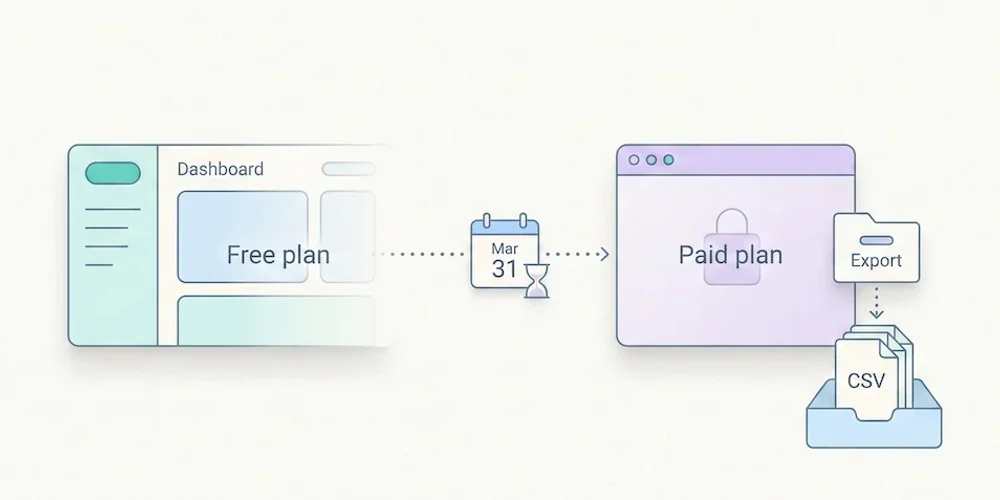
According to Piwik PRO's July 2025 announcement, the economics of the Core offer changed and Business and Enterprise became the paid routes highlighted for hosted professional use. For teams that adopted Core because it was free, the right response is not panic. It is a structured migration review. As of May 9, 2026, buyers should verify current pricing and terms on Piwik PRO's official pages before making a decision. Vendor pricing changes quickly, and analytics migrations are expensive when they are rushed. The decision is about ownership, not only price The repositioning of a generous free analytics tier forces a useful question: what are you actually paying for? If Piwik PRO remains the right product, the budget may be justified by governance, support, hosted infrastructure, retention and enterprise controls. If the team mainly needs readable traffic reporting, a lighter privacy-first SaaS or a self-hosted tool may be a better fit. The mistake is to compare only monthly list prices. The real cost includes setup, data retention, access management, documentation, legal review, reporting adoption and the effort required to explain the dashboard to non-specialists. Migration checklist Before changing tools, export and document:current sites, domains and tracking snippets; retention settings and historical data that must be preserved; dashboards or reports used by leadership, clients or marketing; goals, events and campaign parameters that are still useful; data-processing agreements and provider roles; access rights and users who must be migrated; privacy-policy wording and internal records of processing; the date when old and new tools will run in parallel.Run both tools side by side for a short period when possible. This gives the team a bridge for trend comparison and avoids treating a tool migration as a sudden drop in traffic. How to compare alternatives For a European SME, B2B SaaS or multi-site digital team, use five criteria:Does the tool answer the questions the team actually asks every week? Does the collection model separate minimal analytics from enriched tracking? Are pricing, retention and user limits easy to understand? Can non-specialists read the reports without training? Is the privacy documentation specific enough for your legal review?Plausible, Fathom, Simple Analytics, Matomo and Pomelo can all be reasonable depending on the answer. The best choice is the one that matches your operating model, not the one with the loudest comparison table. Where Pomelo fits Pomelo's intended launch position is narrower and clearer: cookieless by default, Strict first, Extended by explicit configuration, and dashboards designed for teams that need actionable reporting rather than analytics administration. That does not make it a universal replacement for Piwik PRO. It makes it a good candidate when the team wants minimal collection, multi-site readability and a product that documents the difference between baseline and enriched data. Sources Sources checked on May 9, 2026.Piwik PRO, Introducing the new Piwik PRO Core and updated pricing, July 3, 2025 Piwik PRO, Business plan Piwik PRO, Pricing Matomo, Pricing Plausible, subscription plans
- 09 Mar, 2026
Is free analytics still viable in 2026? The real cost of privacy-first freemium
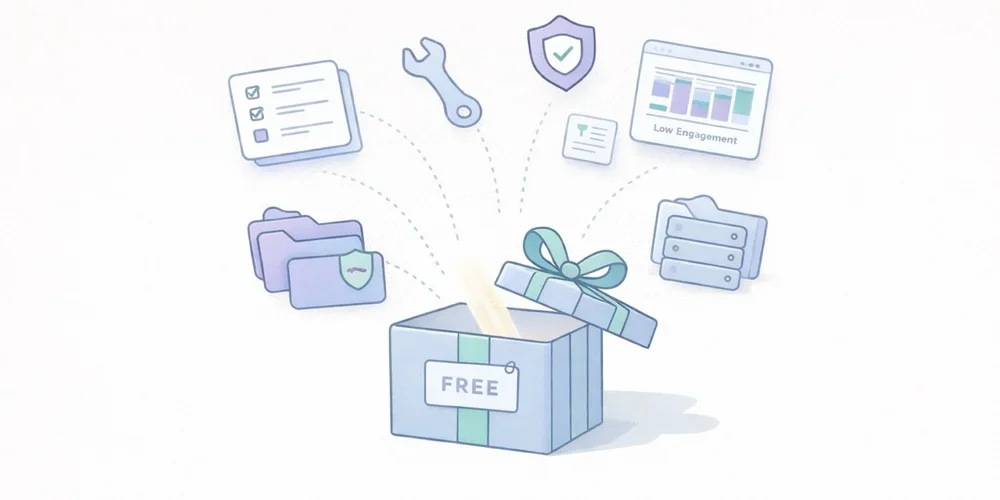
For a long time, the promise sounded simple: web analytics could be free. Install a script, open a dashboard, and start measuring traffic. In 2026, that promise still exists, but it no longer means the same thing across the market. One recent signal made that especially visible: Piwik PRO ended its free Core plan and now presents its Business plan starting at €35 per month. At the same time, other vendors are taking different paths. Simple Analytics now highlights a limited free plan, Plausible still makes free self-hosting available through Community Edition, Matomo keeps its on-premise core free to download, and Fathom takes the most direct route: free trial first, paid subscription after that. So the useful question is no longer whether a vendor puts the word free on its pricing page. The useful question is this: free from what, and under which conditions? With analytics, you almost always pay somewhere. If not in subscription fees, then in setup time, maintenance burden, governance complexity, compliance work, or dashboards that are technically available but barely used. For SMBs and lean digital teams, that hidden cost usually matters more than the headline price. This article offers a simple decision framework. The point is not to say that free analytics is dead. The point is to show when it is still a smart choice, when it turns into a false economy, and why a product’s business model has become part of the product itself. In 2026, "free" covers at least four different models The main problem with the phrase free analytics is that it lumps together models that are economically very different. 1. Free analytics funded by something else In this model, analytics is not really the primary product you are paying for. It may be funded by a broader platform, another revenue stream, a growth strategy, or a larger ecosystem. For the buyer, the upside is obvious. Entry feels frictionless. The downside is that the cost often reappears somewhere else: heavier tooling, more operational dependency, more configuration work, or extra legal complexity when the processing goes beyond strict audience measurement. This is where the CNIL’s position is useful. The French regulator explicitly notes that some analytics offers fall outside the exemption perimeter when providers reuse data for their own purposes. In other words, a tool can look cheap or free at purchase time and become more expensive later if its purposes need tighter legal framing. 2. Limited freemium Freemium means durable free access, but with clear limits. The free plan gets you in the door, while monetization happens through volume, number of sites, users, retention, exports, API access, or collaboration features. In 2026, this is a more credible model than the old “very generous free plan for almost everyone” playbook. It is easier to read. The vendor is effectively saying: the basics stay accessible, and growth pays for the product. Simple Analytics now presents exactly that kind of structure. Its pricing page offers a 14-day full-feature trial and then the option to move either to a paid plan or to a free plan, depending on usage. The real signal here is not just price. It is whether the limits make sense. Healthy freemium nudges you to upgrade because your needs expand. Toxic freemium nudges you to upgrade because the free tier is intentionally frustrating. 3. Open-source, self-hosted analytics This is the classic “free, but” category. There is no software license to pay. Matomo Core remains free to download and use on your own infrastructure. Plausible Community Edition can still be self-hosted for free. Umami also continues to frame self-hosting as always free. On paper, this is attractive. You keep control, you choose the infrastructure, and you avoid recurring vendor fees. In practice, the cost moves rather than disappears. You need servers, backups, updates, monitoring, at least basic security hygiene, and someone who knows what to do when something breaks. Plausible is unusually explicit about this on its self-hosting page: you do not pay them, but you still pay for servers, CDN, backups, and infrastructure, and premium support is not included. For a technical team with existing infrastructure habits, that trade-off can be perfectly rational. For a non-technical SMB, the “free” label can be misleading. 4. Free trial, then paid subscription This is the cleanest model. You try the product for a short period, then you pay if you want to keep using it. Plausible offers a 30-day free trial with no credit card and starts at $9 per month on Starter. Fathom also leads with a 30-day free trial and then starts at $15 per month. Piwik PRO now presents a 30-day trial on its Business plan, starting at €35 per month. Prices and offers were checked on public vendor pages on May 9, 2026. They can change, so verify the official pages before buying. The advantage is clarity. The vendor is not pretending that the service can remain free for every serious use case. It is simply giving you time to validate the fit. For many buyers, that is healthier than a permanently ambiguous free tier. The real cost of analytics is rarely the entry price When a team says “we want a free tool,” it usually means something else:we do not want to make the stack heavier; we do not want a six-week setup project; we do not want to pay for features nobody will open; we want a dashboard multiple people can understand; we want to reduce compliance work rather than move it elsewhere.That is why list price, on its own, is a weak buying criterion. Setup cost A free tool with a confusing model can still cost days of documentation, setup, checks, and internal alignment. That cost is rarely line-itemed, but it is real. Maintenance cost This is the most underestimated part of self-hosted analytics. Matomo itself notes that its on-premise version requires a web server, PHP, a MySQL or MariaDB database, and ongoing work around installation, security, updates, and maintenance. The absence of a license fee is real. The absence of operating cost is not. Governance cost A free tool may work fine for one person and start to break down as soon as multiple sites, multiple stakeholders, shared access, or client reporting enter the picture. Once analytics becomes a collective object, readability and collaboration stop being optional. Compliance cost This is where many comparisons become too loose. In 2025, the CNIL published a self-assessment tool to help vendors determine whether an analytics solution can fit within the limited audience-measurement perimeter. But it also states clearly that this tool is not meant to assess overall legal compliance. That matters because it avoids two common mistakes. The first is assuming that a tool is automatically cheaper overall because there is no license fee, even though it may require heavier legal review or stricter configuration. The second is assuming that cookieless or privacy-first positioning removes the need for governance and legal framing. That is not what the CNIL says. The cost of poor adoption There is one more cost that often stays invisible: the cost of keeping a free tool that nobody really uses. A dashboard that exists but is rarely consulted may be cheap on paper and expensive in missed decisions. If your team only opens analytics when there is a crisis, or if the tool takes more time to interpret than the actions it is supposed to support, the free label stops being decisive. The market is more mature, which means it is less naive about free The end of Piwik PRO’s free plan matters because it reveals a broader market truth. Privacy-first analytics is no longer just a philosophical alternative to Google Analytics. It is a category of products that has to fund hosting, support, security, UX, integrations, collaboration, and sometimes stricter enterprise or regulated-sector requirements. In other words, the more credible an analytics product becomes for real professional use, the more central its funding model becomes. That does not mean free plans are doomed. It means sustainable free plans need sustainable economics behind them. In 2026, three paths look structurally healthier than the old generous-free-for-everyone model:a limited free tier that monetizes growth; open-source software that is free to self-host while operating costs stay on the buyer side; a paid product with a free trial.The fragile path is the broad, feature-rich free plan with no obvious long-term funding logic. When free analytics still makes sense There is no need for overcorrection. Free analytics is still a smart option in several situations. Case 1: one simple site, one main reader, low organizational complexity For a brochure site, a small publication, a side project, or a very small company, a free or limited freemium tool may be enough for a long time. If the real need is to understand traffic sources, top pages, a few key conversions, and broad trends, there is no reason to pay too early. Case 2: real in-house technical autonomy If your team already knows how to run servers, maintain backups, handle updates, and monitor infrastructure, open-source self-hosting can be a rational choice. In that case, “free” is not naive. You know the operating cost exists, and you accept it because you control it. Case 3: shortlisting before a buying decision A good free trial also has real value. It lets the team validate readability, exports, reporting flow, and day-to-day usefulness before making a commitment. When free turns into a false economy The opposite signals are usually easy to spot. You manage multiple sites or multiple stakeholders As soon as analytics must be shared between marketing, leadership, product, agencies, or clients, the limits of “free first” show up much faster. The tool stops being a counter and becomes part of governance. Nobody wants to maintain the stack This is the cleanest self-hosting test. If nobody internally wants to own updates, security, backups, and incident response, then self-hosted free is probably the wrong economic choice. Your use case goes beyond strict audience measurement The CNIL’s framework is narrow by design. It is centered on audience measurement and closely related purposes. As soon as the conversation expands toward broader marketing measurement, acquisition analysis, or other forms of reuse, the legal and operational framing gets more complex. A cheap tool can still become expensive to govern properly. The tool creates more friction than clarity This is often the decisive one. If your team dreads the dashboard, cannot tell which numbers matter, or keeps rebuilding the same views elsewhere, then the real cost has already outgrown the subscription you were trying to avoid. A simple decision framework for 2026 To avoid abstract debates, use a practical rule. Choose limited freemium if you are a small organization with a simple site, straightforward needs, and a desire to get started quickly. Choose open-source self-hosting if you have genuine technical autonomy, a strong control requirement, and explicit acceptance of operating cost. Choose a simple paid SaaS if your main problem is not the license fee but lost time, poor dashboard adoption, and weak clarity across teams. Choose a larger and heavier platform only if you truly need its additional depth, not because the market has trained everyone to confuse complexity with seriousness. The key is to make the business model fit the actual use case. A tool becomes risky when the way it is funded no longer matches what you expect from it. What to keep in mind Free analytics is still viable in 2026, but only if we stop confusing free with simple, durable, or low-friction. The right buying question is no longer “which tool is cheapest?” It is:who really funds the product; where the cost moves if I do not pay a license fee; who will maintain, explain, and govern the tool; when the free model becomes a liability; whether the economics still make sense when traffic, team size, or compliance expectations grow.For many SMBs, the best choice is neither the richest platform nor the absolute cheapest one. It is the tool whose economics are the most honest relative to real usage. That is one reason privacy-first analytics keeps gaining ground. The strongest products in that segment are not trying to pretend everything should be free forever. They are trying to make measurement lighter, clearer, and more sustainable. If you are comparing analytics tools in 2026, compare business models as carefully as you compare features. FAQ Is a free analytics tool necessarily worse? No. It can be a very good fit when needs are simple, the team is small, and the limits of the free tier actually match the use case. The issue is not free itself. The issue is whether the real cost has merely been moved elsewhere. Is self-hosted analytics really free? It is free in licensing terms, not in operating terms. You still need hosting, backups, updates, security, monitoring, and technical time. For teams that already have those capabilities, that can still be efficient. For non-technical SMBs, not always. Does privacy-first analytics automatically remove compliance work? No. It can reduce compliance burden, but it does not remove the need to define purposes, configure the tool properly, inform users, and assess consent requirements where relevant. The CNIL clearly separates audience-measurement exemption analysis from broader compliance assessment. Why do so many analytics vendors move from generous free plans to paid models? Because professional analytics products still have to fund infrastructure, support, security, product development, and often collaboration features. When the monetization path behind a generous free plan is weak, vendors usually tighten the offer sooner or later. Which model is healthiest for an SMB? In many cases, limited freemium or a small paid SaaS is healthier than a complicated zero-cost setup. Those models tend to be more transparent, more stable, and easier to govern across a real team. Sources Sources checked on May 9, 2026.CNIL, Cookies and audience measurement solutions CNIL, audience-measurement self-assessment tool, July 2025 Simple Analytics, Pricing Plausible, Pricing Plausible, Self-hosted web analytics Matomo, Is Matomo truly free to use? Matomo, On-Premise user guide Fathom, Pricing and free trial Piwik PRO, Business plan Piwik PRO Community, Will the free Piwik PRO remain active after February 2026? Umami, Pricing
- 02 Mar, 2026
Plausible vs Fathom vs Simple Analytics: a practical 2026 comparison
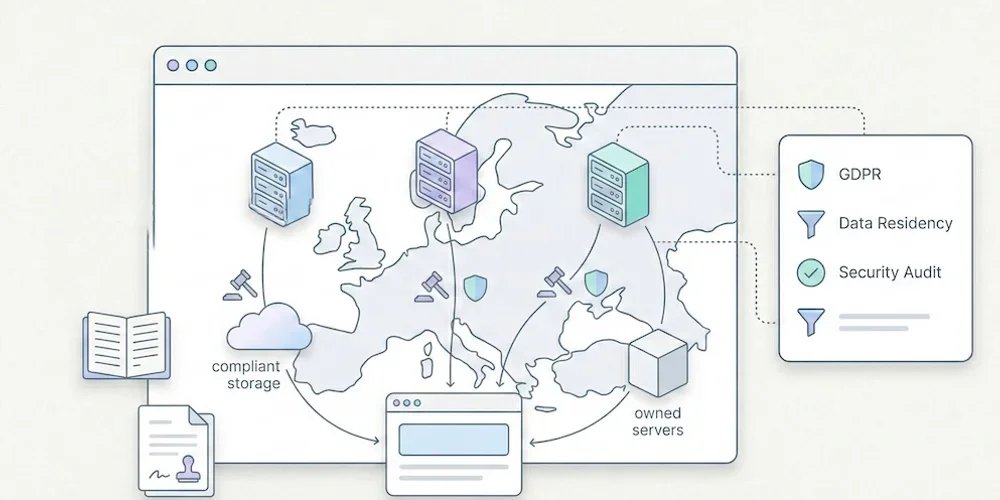
Plausible, Fathom and Simple Analytics sit in the same broad category: lightweight, privacy-first web analytics for teams that do not want the complexity of GA4 or an enterprise analytics suite. They are not interchangeable, though. The right choice depends on your traffic volume, team model, reporting needs, hosting expectations and internal privacy review. Prices and packaging change often. This comparison is based on public vendor pages checked on May 9, 2026. Always verify the current vendor page before buying. The short version Choose Plausible if you want an established open-source product, a clean dashboard, a self-hosting route and detailed documentation around subscription tiers. Choose Fathom if you want a simple paid SaaS with a deliberately small feature surface and straightforward multi-site pricing. Choose Simple Analytics if you want a Netherlands-based product with a clearly documented privacy posture, simple reports and a free entry point within the vendor's published limits. Choose Pomelo if your priority is multi-site reporting for European SMEs, B2B SaaS teams and agencies, with Strict collection by default and Extended collection only when explicitly configured. Comparison tableCriterion Plausible Fathom Simple AnalyticsMain fit Teams wanting open-source credibility and simple reports Teams wanting a compact paid SaaS Teams prioritizing documented privacy posturePricing model Subscription tiers by usage Subscription tiers by pageviews Free or paid plans depending on usage limitsSelf-hosting Community Edition available Not the core model Not the core modelMulti-site use Supported Supported Supported by planReporting style Minimal dashboard, events, goals, campaigns Minimal dashboard, events, campaigns Minimal dashboard, goals, referrersBuyer risk to verify Plan limits, self-hosting maintenance, imported history Plan fit and feature depth Plan limits and event/view countingPrivacy posture is a configuration question All three vendors position themselves around privacy-first analytics, but a vendor promise is not the same as your live setup. Your team still needs to document:what the script collects; whether events or campaign parameters add personal or sensitive context; retention periods; provider role and data-processing terms; transfers and hosting location; whether other trackers on the same site change the consent analysis.This is where Pomelo's Strict/Extended split is useful as a product model. Strict should cover baseline audience reporting. Extended should be a deliberate setting for richer campaign, event, goal or technical context. The dashboard should explain the effect of that setting instead of hiding it inside marketing copy. Pricing should be compared at your real volume Do not compare only entry prices. Model the cost at your actual monthly pageviews, number of sites, number of users, retention needs and export/API expectations. For example, a tool that is cheaper at 10,000 monthly pageviews may be more expensive at 500,000. A self-hosted option may reduce subscription fees but add infrastructure, backup and maintenance cost. A plan with generous site limits may be cheaper for an agency than a plan priced per site. Reporting quality matters more than feature count The best analytics tool is the one the team actually reads. Before buying, ask the person who will use the dashboard every week to answer three questions from a trial account:Which acquisition sources are working? Which content or pages deserve action? Which conversions changed materially since last period?If the tool cannot answer those questions quickly, more reports will not fix the problem. Sources Sources checked on May 9, 2026.Plausible, subscription plans Plausible, data policy Fathom, pricing Fathom, features Simple Analytics, pricing Simple Analytics, what we collect
- 09 Feb, 2026
Why trust is becoming a growth constraint, not a privacy slogan
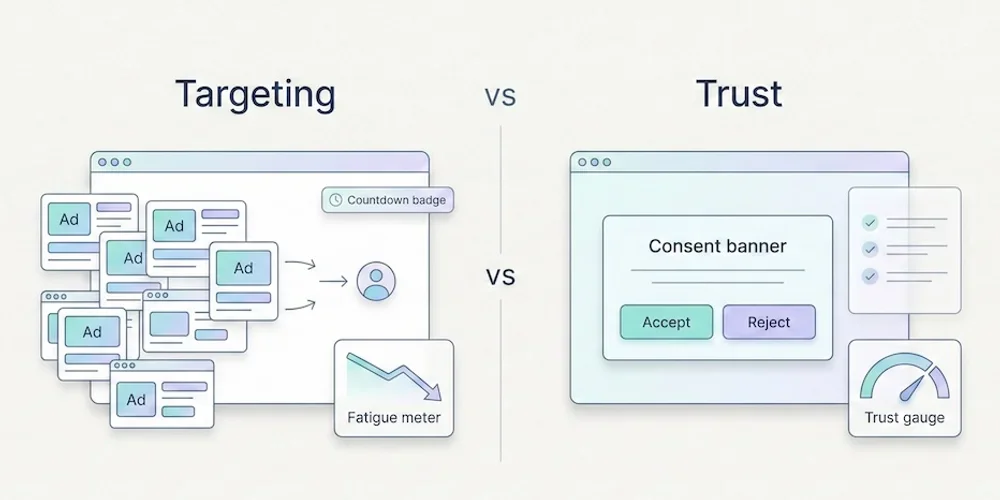
Privacy-first marketing should not be sold as a moral badge or a guaranteed conversion lift. The stronger argument is more pragmatic: trust is becoming part of the buying experience, and intrusive data practices can create friction that teams do not always measure. For European SMEs, B2B SaaS teams and agencies, this matters because growth depends on repeated interactions. A buyer may discover you through content, compare you over several visits, ask colleagues, read docs and return later. If every interaction feels extractive, the relationship weakens before sales even starts. What trust changes operationally Trust does not mean collecting no data. It means collecting data with a clear purpose, explaining it plainly and avoiding silent escalation from measurement to targeting. In practice, trust changes five workflows:analytics: measure what the team actually uses; forms: ask only for fields needed at that stage; advertising: separate measurement from retargeting; content: answer real buyer questions instead of hiding value behind gates; reporting: explain limits instead of pretending every number is perfect.Why targeting can become expensive Targeting can be useful when it is transparent, proportionate and aligned with user expectations. It becomes expensive when it drives:consent friction; duplicated tags; heavier pages; lower trust in forms and demos; noisy attribution debates; extra legal and vendor review.These costs rarely appear in ad-platform dashboards. They show up as longer sales cycles, more implementation work and weaker confidence in the numbers. A practical trust checklist Before adding a new tracking or targeting feature, ask:What decision will this data support? Can we answer the same question with less data? Will the visitor understand why this happens? Does this belong in baseline analytics or an explicit enriched setup? Who will review whether the data is still useful in three months?If the team cannot answer, delay the feature. Where Pomelo fits Pomelo should not promise that privacy-first automatically increases conversion. It should promise a better operating model: cookieless by default, minimal collection, Strict first, Extended by configuration, and reporting that makes data limits visible. That is enough. Teams do not need another vague trust slogan. They need a product that helps them govern measurement choices without slowing down every launch. SourcesCisco, 2025 Data Privacy Benchmark Study, April 2, 2025: https://investor.cisco.com/news/news-details/2025/Ciscos-2025-Data-Privacy-Benchmark-Study-Privacy-landscape-grows-increasingly-complex-in-the-age-of-AI/default.aspx Cisco, 2025 Data Privacy Benchmark Study PDF: https://www.cisco.com/c/dam/en_us/about/doing_business/trust-center/docs/cisco-privacy-benchmark-study-2025.pdf Edelman, 2025 Trust Barometer: https://www.edelman.com/trust/2025/trust-barometer Edelman, 2025 Brand Trust special report: https://www.edelman.com/trust/trust-barometer